
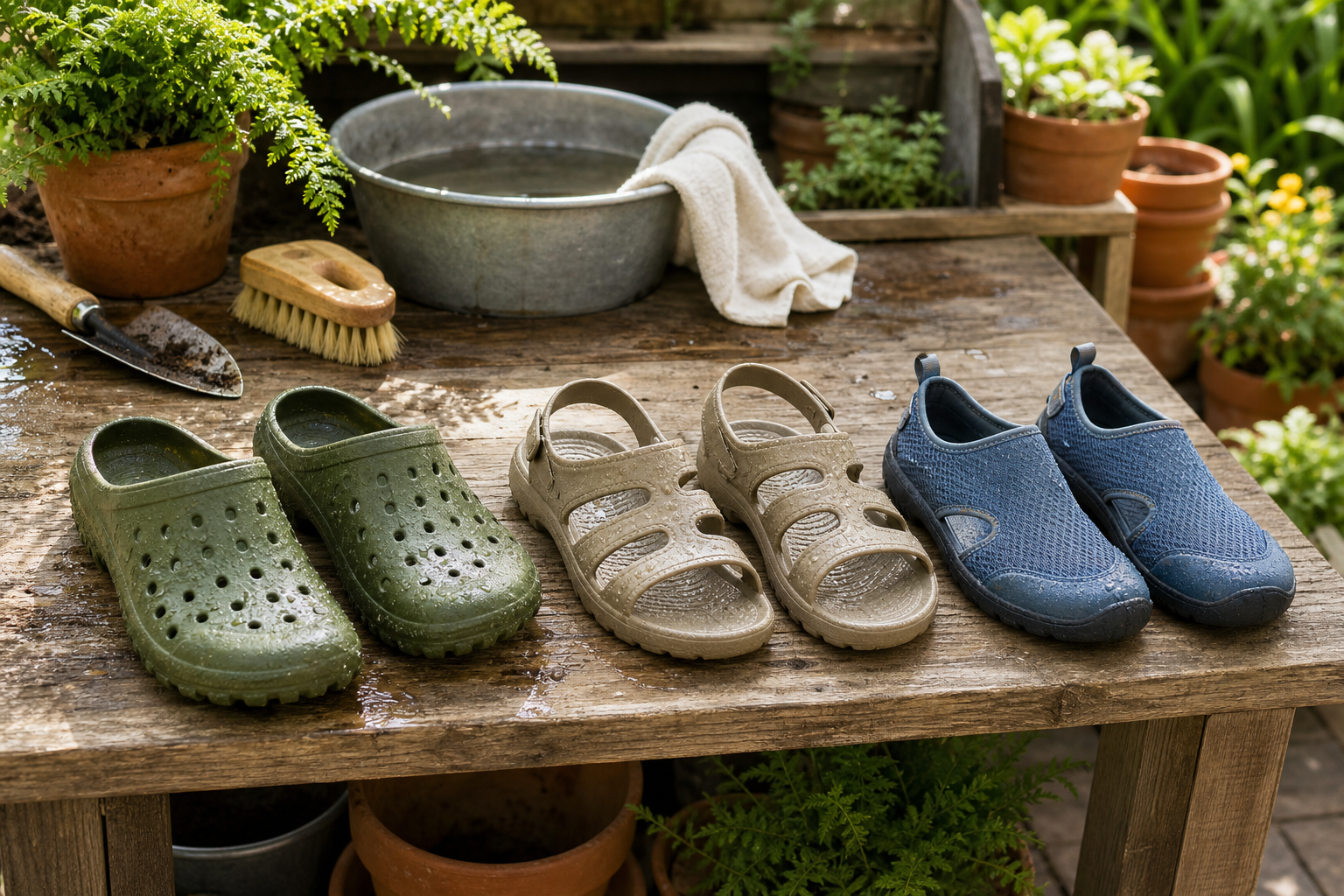
The short answer: choose a closed-toe garden clog for more coverage around soil and hand tools, a garden sandal when openness and easy access matter, and a water shoe when the exact listing is intended for wet activities. None of these categories automatically guarantees slip resistance, puncture protection, waterproofing or medical support. Match the footwear to the task, surface and product description.
After use, remove loose soil, follow the material-specific cleaning instructions and dry footwear away from excessive heat unless the maker directs otherwise. A simple routine prevents wet soil from hardening in ventilation holes and tread channels, but it cannot make unsuitable footwear safe for every job.
Garden footwear compared
| Type | Useful feature | Main limitation to check |
|---|---|---|
| Ventilated clog | Closed toe with easy step-in access | Open heel and holes can admit debris |
| Garden sandal | More open upper and adjustable or fixed straps | Less coverage from soil, stems and tools |
| Water shoe | Foot-enclosing upper designed for the listed wet use | Mesh can retain grit and needs thorough drying |
1. Start with the garden task
For light watering, potting or patio cleanup, convenience may be the priority. For digging, moving heavy pots, using powered equipment or handling sharp materials, follow the tool manufacturer’s protective-equipment instructions and choose task-appropriate footwear. Casual clogs are not a substitute for safety footwear.
Compare the Comfy Garden Clogs and Softwalk Clogs as step-in options. Read each live page for closure, upper, sole and size information. Product names and appearance cannot establish certified protection or traction.
2. Decide how much coverage you need
A closed toe can reduce direct contact with loose soil and minor splashes, but ventilation holes remain openings. An open sandal exposes more of the foot and may be easier to rinse. The Comfy Garden Sandals are an active open option; evaluate straps and foot coverage for the intended task.
Do not wear open footwear where the activity calls for protective boots or closed safety shoes. Keep feet away from mower blades, trimmers, forks, spades and falling containers regardless of shoe style.
3. Fit the heel, toe and width
Measure both feet late in the day while standing. Compare heel-to-toe length and the widest forefoot point with the exact chart. Leave enough room to move toes without sliding forward. A heel strap, if present, should hold without rubbing or forcing the foot ahead.
- Walk, turn and use one low step indoors.
- Check that toes do not strike the front.
- Look for sidewall pressure at the widest point.
- Wear the socks intended for gardening.
- Recheck fit after adding an insole only if the product permits it.
Foot pain, wounds, numbness or medical conditions require individualized advice from a qualified clinician; a retail guide cannot diagnose or prescribe footwear.
4. Inspect the outsole instead of trusting a claim
Mud, algae, wet decking and smooth stone can be slippery in any footwear. Examine tread depth and condition, but do not call a product “non-slip” unless the exact listing provides substantiated testing. Slow down, clean contaminated soles and avoid unstable surfaces.
Health Canada recommends reducing fall hazards around the home. In garden areas, maintain steps and paths, improve lighting, secure hoses and remove loose clutter. Footwear is one part of the environment, not a guarantee against falls.
5. Use water shoes only within the listing’s purpose
The Rubber Beach Shoe and Honeycomb Mesh Casual Beach Shoes are active water-oriented options. Confirm the exact materials and permitted uses. “Water shoe” does not automatically mean fully waterproof, puncture-proof, slip-proof or safe in fast current.
Rinse out sand and grit promptly. Check inside for stones before wearing again. Never enter unfamiliar water without assessing local hazards and following posted guidance.
6. Clean by material, not by category name
- Knock off dry loose soil outdoors using a soft brush.
- Remove detachable insoles only if the instructions allow it.
- Use cool or lukewarm water and a mild product only where approved.
- Brush tread channels and ventilation holes gently.
- Rinse away residue and blot excess water.
- Air-dry in a ventilated place away from direct high heat unless directed otherwise.
Do not assume every “rubber” clog is natural rubber or that every molded shoe tolerates bleach, solvents, a dishwasher, washing machine or direct sun. Heat can deform some polymers; cleaners can alter colour, adhesives and finishes.
7. Prevent cross-contamination
Garden soil can contain fertilizer, compost, animal waste or plant disease organisms. Keep garden footwear near the entry rather than wearing it through food-preparation areas. Use gloves as appropriate, wash hands after gardening and clean tools and footwear separately from kitchen items.
The U.S. Centers for Disease Control and Prevention advises gardeners to wear protective clothing and wash hands after contact with soil. Follow local pesticide and fertilizer labels exactly; footwear cleaning does not neutralize chemical exposure.
8. Store footwear dry and supported
Before storage, check tread, straps, uppers and attachment points. Allow interiors to dry fully. Store pairs away from heaters and locations where they remain compressed or collect standing water. Replace footwear when damage changes fit, exposes sharp edges or compromises the intended use.
Frequently asked questions
Are garden clogs waterproof?
Not automatically. Ventilation holes allow water and debris to enter. Check the exact material and construction claims.
Are garden clogs slip-resistant?
Do not assume so. Traction varies by product, wear and surface contamination; no outsole eliminates fall risk.
Can I put garden clogs in a dishwasher?
Only if the manufacturer expressly allows it. Heat and detergent may deform or damage some materials.
Should I wear sandals while digging?
Open sandals provide less coverage. Follow tool instructions and use task-appropriate protective footwear.
How often should I clean garden shoes?
Remove heavy soil after each use and clean more thoroughly when grit, odour or contamination accumulates, following the product instructions.
Bottom line
Closed clogs, open sandals and water shoes solve different garden needs. Choose coverage and fit for the task, evaluate real surfaces cautiously, and never replace safety footwear with a casual clog. Brush off soil, clean according to the actual material instructions, dry thoroughly and inspect before reuse.